
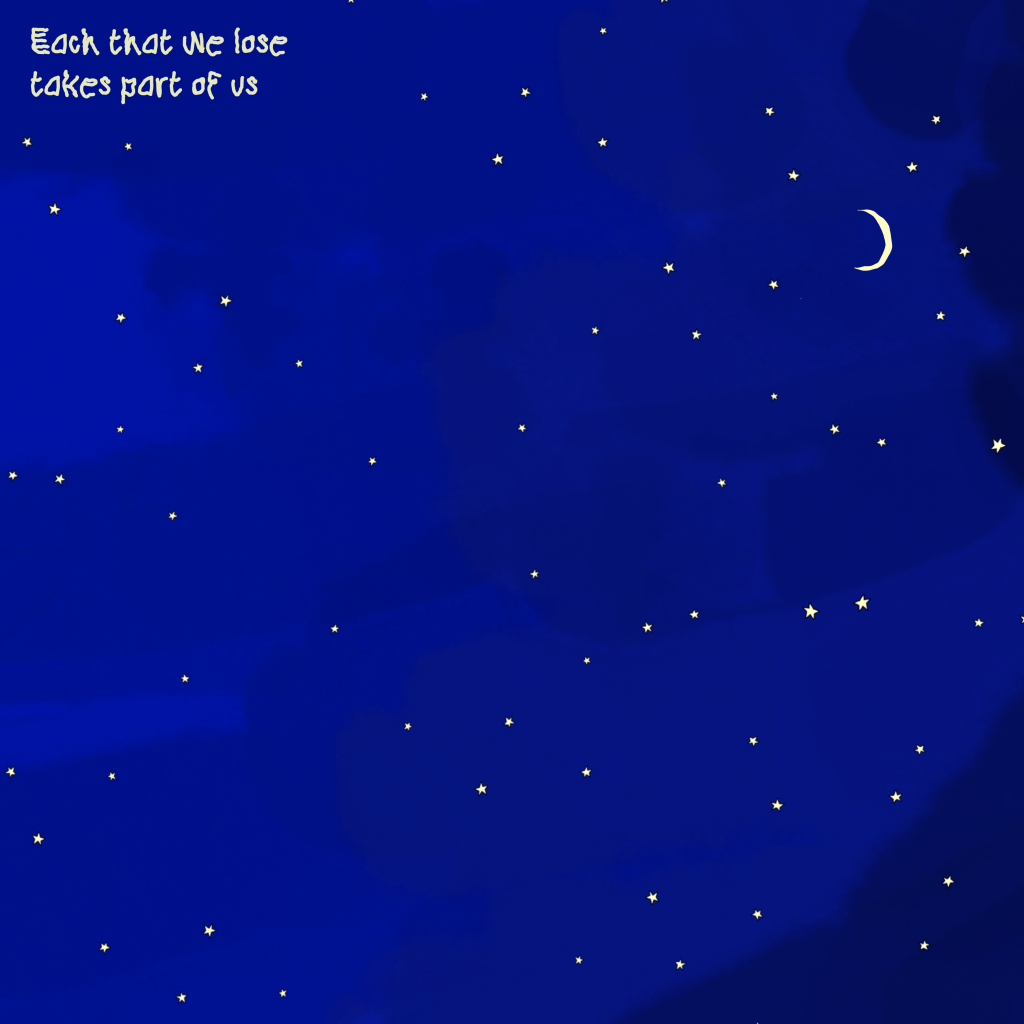
Each that we lose takes part of us
The poem belongs to Dickinson’s late period and is dated to 1884, two years before her death. Dickinson’s final decade was marked by repeated bereavements, including the deaths of family members and close friends, as well as by her own declining health.[1] The poem was written after Dickinson learned of the death of Judge Otis Phillips Lord, an old and beloved friend and probably the major romantic attachment of her later life. In the poem, loss is imagined as the removal of part of the self: [2]
Each that we lose takes part of us;
A crescent still abides,
Which like the moon, some turbid night,
Is summoned by the tides.
The phrase “summoned by the tides” reverses the ordinary causal relation: scientifically, the moon produces the tides, but Dickinson imagines the tides as calling the moon into appearance.
text: Emily Dickinson
production: Gregor Huber
Guitar: Wolfgang Sambs
released 2026
[1] Janet W. Buell, The New England Quarterly 62, no. 3 (1989): 323–345.
[2] Janet W. Buell, The New England Quarterly 62, no. 3 (1989): 323–345;
The son of ecstasy (A Sloop of Amber slips away)
In “A Sloop of Amber slips away” Dickinson transforms a sunset into a miniature maritime drama. The “Sloop of Amber” suggests the golden sun—or a sunlit cloud—moving across the “Ether Sea” of the sky. Its disappearance becomes a peaceful shipwreck: “wrecks in Peace” combines destruction with tranquillity, presenting sunset not simply as an ending but as a beautiful dissolution.
A Sloop of Amber slips away
Upon an Ether Sea,
And wrecks in Peace a Purple Tar,
The Son of Ecstasy –
The final phrase, “The Son of Ecstasy,” contains a likely pun on son/sun and gives the natural scene a spiritual dimension.[1]
text: Emily Dickinson
production: Gregor Huber
released 2026
[1] Margaret H. Freeman and Masako Takeda, “Art, Science, and Ste. Emilie’s Sunsets: A Háj-Inspired Cognitive Approach to Translating an Emily Dickinson Poem into Japanese,” Style 40, nos. 1–2 (2006): 109–127.
[•] Link (Spotify)
Ozymandias
Percy Shelley’s sonnet reflects on the collapse of political power, imperial vanity, and human attempts at permanence. The poem presents a ruined statue of a once-mighty ruler in an empty desert: the king’s boast — “Look on my Works, ye Mighty, and despair!” — survives only as irony, because nothing remains around it. [1]
A key feature is that the poem is indirectly narrated: the speaker reports what a “traveller from an antique land” said. This distance makes Ozymandias’s power seem even more remote and unstable. Authority is repeatedly displaced — from king, to sculptor, to traveller, to speaker, to reader.[2]
text: John Keats
guitar: Wolfgang Sambs
production: Gregor Huber
released 2026
____
[1] Ewan McAlpine, “‘Passions Read’: ‘Ozymandias’,” European Romantic Review 33, no. 5 (2022)
[2] Jacqueline Wagner, “The Visionary Reader in Shelley’s Sonnets,” Keats-Shelley Journal 41 (1992): 77–94.
[•] Link [Spotify]
on first looking into chapman’s homer
The track is based on John Keats’s famous sonnet about the shock of discovering Homer through George Chapman’s English translation. While the poem’s main theme is the narrator’s mind-opening epiphany, a central point is mediation: Keats experiences Homer not directly, but through Chapman. In the poem’s final section, the narrator — historically incorrectly [1] — compares his experience to that of the murderous Spanish conquistador Cortés [2] on a “peak in Darien”.
text: John Keats
guitar: Wolfgang Sambs
production: Gregor Huber
released 2026
____
[1] Charles J. Rzepka, “‘Cortez: Or Balboa, or Somebody like That’: Form, Fact, and Forgetting in Keats’s ‘Chapman’s Homer’ Sonnet”, Keats-Shelley Journal 51 (2002).
[2] Matthew Restall, “The Spanish Conquest Revisited,” History Compass 10, no. 2 (2012): 151–160.
[•] Link [Spotify]
[•] Link [Youtube]
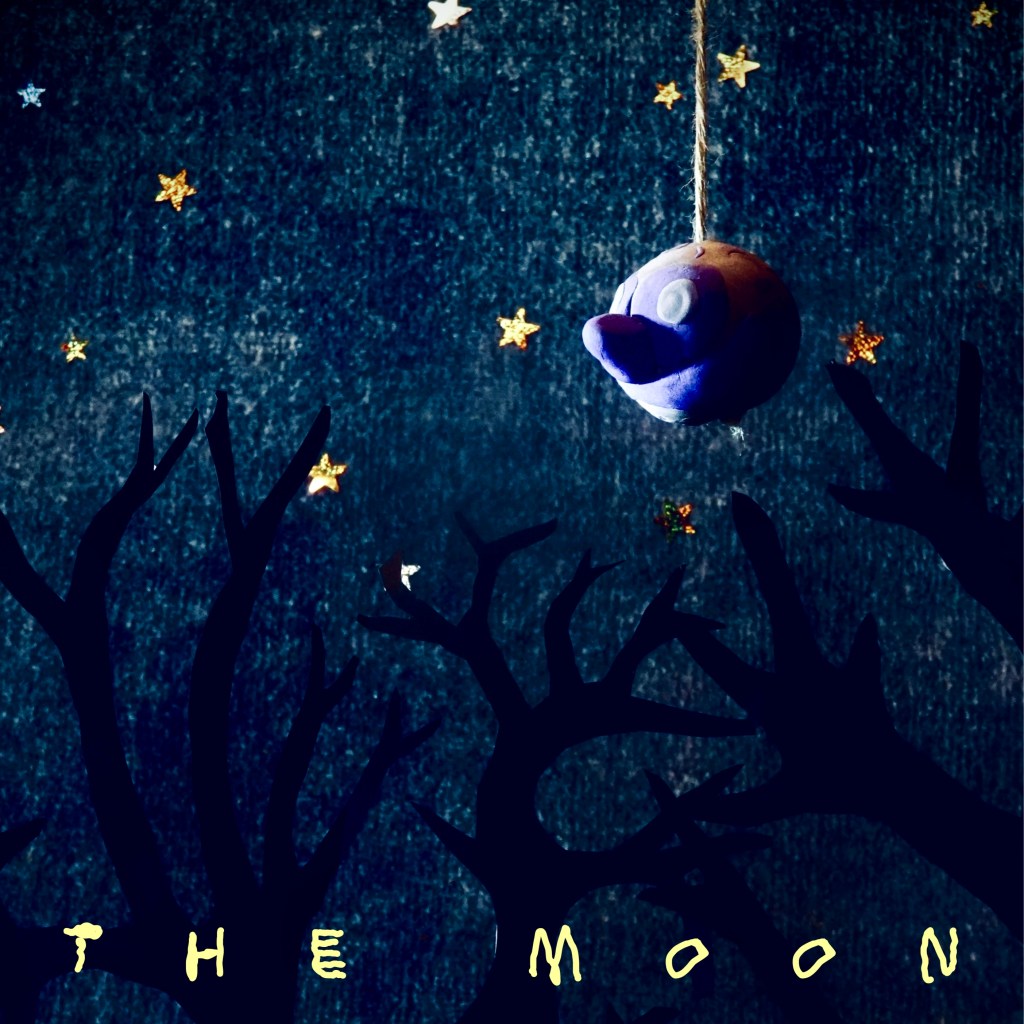
the moon
The track is based on a poem by Emily Dickinson that depicts a submissive, hierarchical love affair.[1] The moon and the sea represent the two sides of a romantic relationship: the moon, as the force behind the tides, controls the sea, which yields to it without resistance. As in other poems by Dickinson,[2] the poem is marked by a distinctly masochistic aesthetic, shaped by its central themes of submission, obedience, and hierarchy.
text: Emily Dickinson
guitar: Wolfgang Sambs
production: Gregor Huber
released 2026
____
[1] Ursuala Caci, Interchangeability and Mutuality: The Relativity of Power in Dickinson’s Gendered Relationships, The Emily Dickinson Journal, Vol. XXIII, No. 2.
[2] Robert McClure Smith, Dickinson and the Masochistic Aesthetic, The Emily Dickinson Journal Volume 7, Number 2, Fall 1998.
[•] Link [Spotify]

16 Tracks Based On Robert Potter’s Translation Of Euripides’ Iphigenia In Tauris
As the title implies, the album’s lyrics are based on Iphigenia in Tauris by Euripides, more specifically on Robert Potter’s English translation of the play.
Analog sounds (Behringer DeepMind 12) and digital textures (Omnisphere) are combined with samples of acoustic instruments (Spitfire Studio Strings). The album moves between orchestral expansiveness and more intimate soundscapes. The mid-range vocals (Neumann U67), mostly remaining at a moderate dynamic level, are often doubled, and are occasionally set chorally. Modern in its production, harmonically and structurally inspired by earlier music.
01 intro
[•] Link [Spotify]
02 the holy to attend
The drama opens with a monologue by Iphigenia. The young woman stands before a temple of Diana and recounts her past. How did it come about that, far from her homeland, she must serve as Diana’s priestess in the foreign land of Tauris?
It all began when Iphigenia’s father Agamemnon, king of Mycenae, wished to lead his fleet to the Trojan War, but a dead calm prevented the ships from departing. According to a prophecy delivered by the seer Calchas, the gods could be appeased only by a human sacrifice: Agamemnon was to put his own daughter Iphigenia to death. And indeed Agamemnon submitted to what seemed to be the will of the gods; and the murder would have been committed, had not Diana intervened at the last moment, secretly substituted a hind for the girl, and carried her off to distant Tauris.[1]
In Tauris, Iphigenia is now bound to serve Diana as priestess. As though that were not enough, the Taurian cult of Diana is bloodthirsty and compels the young woman herself to take part in atrocities: by Taurian law, every stranger who enters the land must be sacrificed in Diana’s name. The office of high priestess requires that Iphigenia herself perform these sacrificial rites.
____
[1] Diana’s motives for first demanding a sacrifice and then rescuing Iphigenia remain unclear in Euripides’ drama; see Kyriakou, A commentary on Euripides’ Iphigenia in Tauris 58.
[•] Link [Spotify]
03 What cares disturb thy rest?
After telling of her past, Iphigenia turns to the present: she speaks of dark dreams that have lately haunted her. The Chorus—priestesses who, like her, were abducted from Greece as young girls and are now devoted to Diana—hurries in and asks what troubles her.
____
[•] Link [Spotify]
04 visions
Iphigenia then recounts what happened in these grim visions: her only brother, Orestes, appeared to her as dead. She is convinced that these forebodings must be true. In accordance with custom, the desperate Iphigenia therefore brings libations— milk, wine, and honey — mourns her brother Orestes, and begs him to accept the offerings.[2]
____
[2] According to Greek custom, Iphigenia ought to have left tears and a lock of hair at her brother’s grave; see Kyriakou, 92 f. Yet she imagines his grave to be far away in Greece and therefore forever inaccessible.
[•] Link [Spotify]
03 What cares disturb thy rest?
After telling of her past, Iphigenia turns to the present: she speaks of dark dreams that have lately haunted her. The Chorus—priestesses who, like her, were abducted from Greece as young girls and are now devoted to Diana—hurries in and asks what troubles her.
____
[•] Link [Spotify]
05 mournful song
The Chorus does not doubt the truth of these visions and joins in a song of lamentation.[3]
____
[3] As the Chorus itself emphasizes, this song is in the “Asiatic” mode, which stylistically appears to highlight their grief; see Kyriakou, 94 f.
[•] Link [Spotify]
06 interlude I
But Iphigenia’s visions have deceived her: Orestes is in fact alive; more than that, by a twist of fate he has just landed in Tauris with his companion Pylades. He too has not been spared by fate in the years since Iphigenia’s supposed sacrifice: Orestes has slain his own mother Clytemnestra in revenge, after she had brought about the death of her husband Agamemnon—the father of Orestes and Iphigenia. Thereupon Orestes is pursued by cruel tormenting spirits, the Furies. According to an oracle, the only way to escape them is to carry the statue of Diana from Tauris back to Greece. Thus Orestes’ path, too, leads to distant Tauris.[4]
____
[4] A frequent theme; see Kyriakou, 150.
[•] Link [Spotify]
07 How did they pass?
At last a herdsman reports to Iphigenia that two young men have reached the land by sea. Iphigenia’s attendants are astonished by the perilous voyage of the strangers. At the same time, the priestesses utter words of warning: whatever longings may have driven these foreign men to Tauris, human desires are insatiable and must in the end lead to ruin.
____
[•] Link [Spotify]
08 the ills to come
Orestes and Pylades are brought in bound. Iphigenia does not recognize her brother, since he was still a child when she herself was taken to Tauris. As the law requires, Iphigenia and the Chorus prepare the execution of the two strangers. Even while abhorring the impending human sacrifice, Iphigenia and her attendants try to offer consolation: Iphigenia stresses the unpredictability of every human fate and the inscrutability of the divine designs. Yet Orestes and Pylades do not respond to Iphigenia’s attempts to draw them into conversation, and remain sparing of words. Only when Iphigenia learns that the two doomed young men come from Greece, and asks them to do her a favour, does Orestes, in accordance with custom, enter into dialogue with her. Iphigenia therefore proposes that Orestes be spared and sent back to Greece as a messenger bearing a message.
____
[•] Link [Spotify]
09 interlude II
Orestes cannot accept this and instead proposes that Pylades—who has shared his life side by side with him—be saved, while he himself should die. Iphigenia agrees.
____
[•] Link [Spotify]
10 this message to orestes
Iphigenia hands Pylades a letter addressed to Orestes, in which she tells of her fate and implores her brother to rescue her from Tauris. In case the letter should be destroyed or lost, Pylades asks that the contents of the message be told to him. When Iphigenia thereupon reads the letter aloud and in doing so reveals her own story, the siblings, long separated from one another, finally recognize each other.
After this recognition, the sacrifice can no longer take place under the cruel Taurian customs. Iphigenia therefore devises a cunning plan that will make possible not only their escape from Tauris but also the theft of Diana’s statue, so that Orestes may accomplish his mission and be freed from the Furies:
Iphigenia, according to the plan, will tell the Taurians that Orestes, with the assistance of Pylades, has murdered his own mother and that this dreadful deed has polluted them both, so that their sacrifice in honour of Diana is impossible. Therefore, before they can be sacrificed, Orestes and Pylades, together with the statue of Diana—which has likewise been polluted by the presence of the murderers—must undergo a ritual purification in sea-water.[5][6][7]
This purification, she will say, must by all means take place unobserved and away from the eyes of strangers, because the corruption of Orestes and Pylades is contagious to all who are still untainted. This pretext is meant to give the siblings sufficient opportunity to flee from Tauris.
____
[5] The ritual is also to involve the slaughter of two lambs, whose blood is to cleanse the shameful bloodshed committed by Orestes and Pylades—a standard motif in Greek cult; see Kyriakou, 389.
[6] Both the sheer vastness of the sea and the salt it contains, to which purifying force was attributed, make ritual cleansing in the sea plausible; see Kyriakou, 380.
[7] Both birth and death were regarded as sources of pollution for consecrated places; see Kyriakou, 143.
[•] Link [Spotify]
11 Rising Gales
Iphigenia’s attendants once more raise a song. They sing of their unfulfillable longing to return to Greece, of Iphigenia’s now genuinely imminent homecoming, and they wish that the wind may bear Iphigenia gently home across the sea.
____
[•] Link [Spotify]
12 hunt I
But the escape plan fails. Storm-winds make it impossible for Iphigenia, Orestes, and Pylades to flee from Tauris. Thoas is informed of the attempted escape by a messenger, who identifies Iphigenia as the one who orchestrated it.
____
[•] Link [Spotify]
13 hunt II
King Thoas, now enraged and at first unable to comprehend the deceit, immediately gives his subjects orders to recapture and kill the fugitives together with Iphigenia’s attendants. [9][10]
____
[•] Link [Spotify]
[9] A ritual sacrifice is no longer at issue at this point, since such a sacrifice was not regarded by the Taurians as a punishment; see Kyriakou, 448.
[10] Thoas addresses the Taurians as “Inhabitants of this barbaric land”; the term barbaric (barbaros) is used in tragedy by non-Greeks without racist connotation; see Kyriakou, 376.
14 interlude III
Before Thoas can set out for the shore, however, Minerva appears at the last moment— a classic case of a dea ex machina.[11]
Minerva tells Thoas and the protagonists alike what fate has ordained for them: first of all, Thoas must desist from pursuing the Greeks and allow Orestes, tormented by the Furies, to complete his mission.[12][13]
____
[11] How the appearance of gods was staged in Euripides’ time is uncertain; it is conjectured that some sort of crane was used — hence ex machina; see Kyriakou, 450.
[12] Remarkable in Minerva’s speech is that it leaves several central questions unresolved: it remains unclear (1) what power summoned the storm that made escape from Tauris impossible, (2) why the Furies should be appeased if Orestes brings Diana’s statue to Greece, (3) what position Diana takes with regard to the Taurian human sacrifices and (4) whether the Taurians may (or even should) continue to offer human sacrifice; see Kyriakou, 451, 462.
[13] On fate as a faceless power to which even the gods are subject, see Kyriakou, 451, 466.
[•] Link [Spotify]
15 to athens
At last, after far too long in exile, the brother and sister together with Pylades are to sail homeward to Athens. It is ordained for Iphigenia to continue serving as Diana’s priestess at Brauron, near Athens, where ritual observances in her honour are to be held even after her death.
____
[•] Link [Spotify]
16 outro
____
[•] Link [Spotify]

